

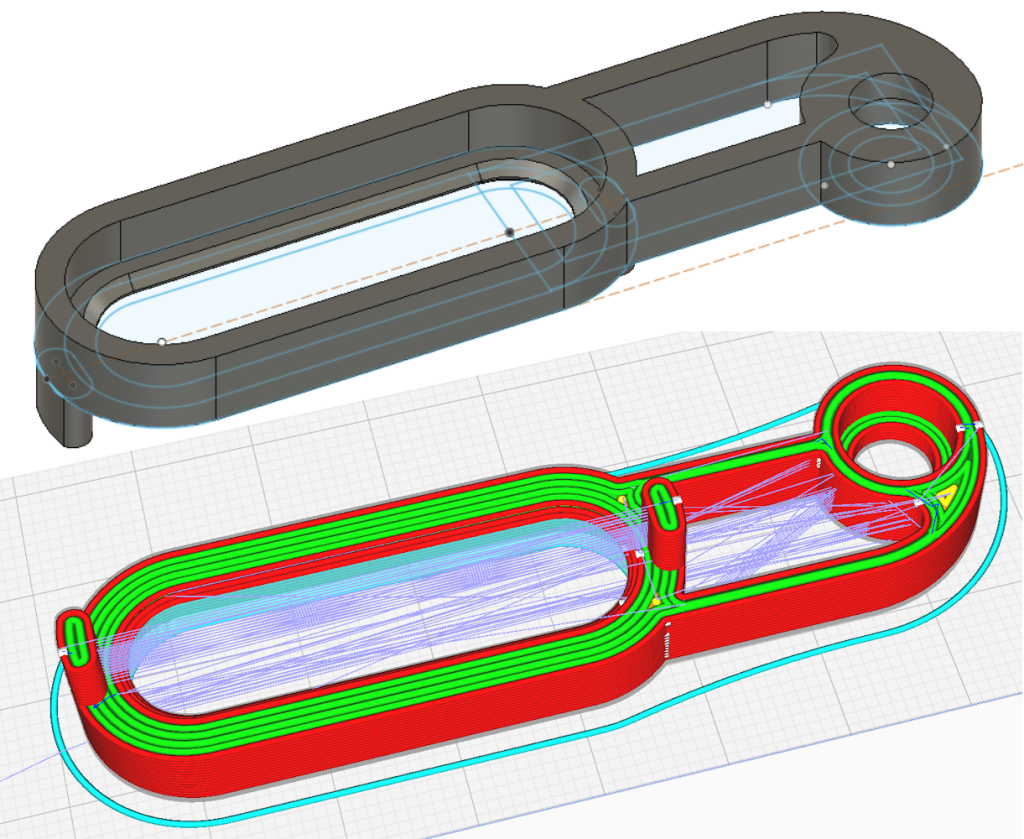
3D-printed replacement parts — when 10 minutes of printing rescues a whole device
A single tiny plastic clip you cannot buy anywhere can park a multi-thousand-dollar tool. Here's how to step around it.
We all know the feeling: one small plastic part snaps and you cannot find it on sale anywhere. Without it, a perfectly good device goes in the bin. Or onto the print bed.
When looks aren’t the point
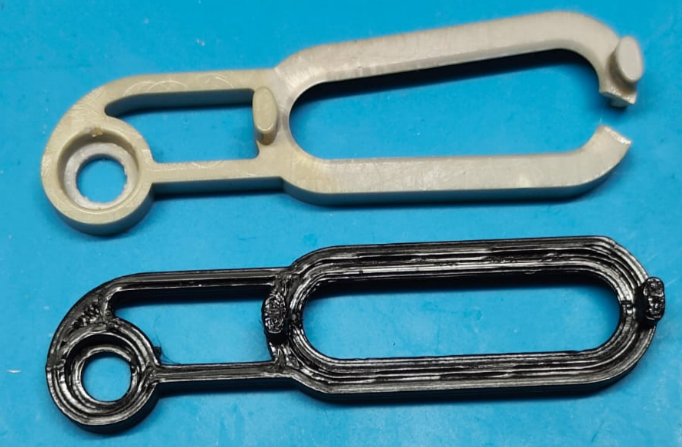
In technical printing, what matters is mechanical performance, not appearance. The surface can be rough, the layers visible — if the part holds load for years, nobody peeks underneath.
The print below was produced in FDM with a large nozzle. It doesn’t look like a designer piece, but:
- print time: ~10 minutes,
- material cost: pennies,
- device back in service the same day.
Why PET-G, not PLA
PLA is cheap and easy to print, but it has two weaknesses: brittleness and low temperature resistance (~60 °C). PET-G beats it on both:
- slightly more flexible — tolerates impact and bending,
- higher thermal resistance — stable up to 80 °C,
- decent chemical resistance (most household fluids are fine).
For most “spare parts for an appliance” jobs it’s the right default material.
Who this is for
- white/brown goods (clips, guides, plugs),
- workshop equipment (handles, knobs),
- older office equipment whose spares left the supply chain long ago,
- machines and tools where the factory part has a multi-week lead time.
A photo with a ruler or the old broken part is enough — modelling and printing is on us.